Roman Glass Perfume Vessel · 1st Century CE
This delicate Roman glass vessel, dating to the first century CE, reflects the artistry of ancient glassmakers and the importance of fragrance and cosmetics in Roman society.
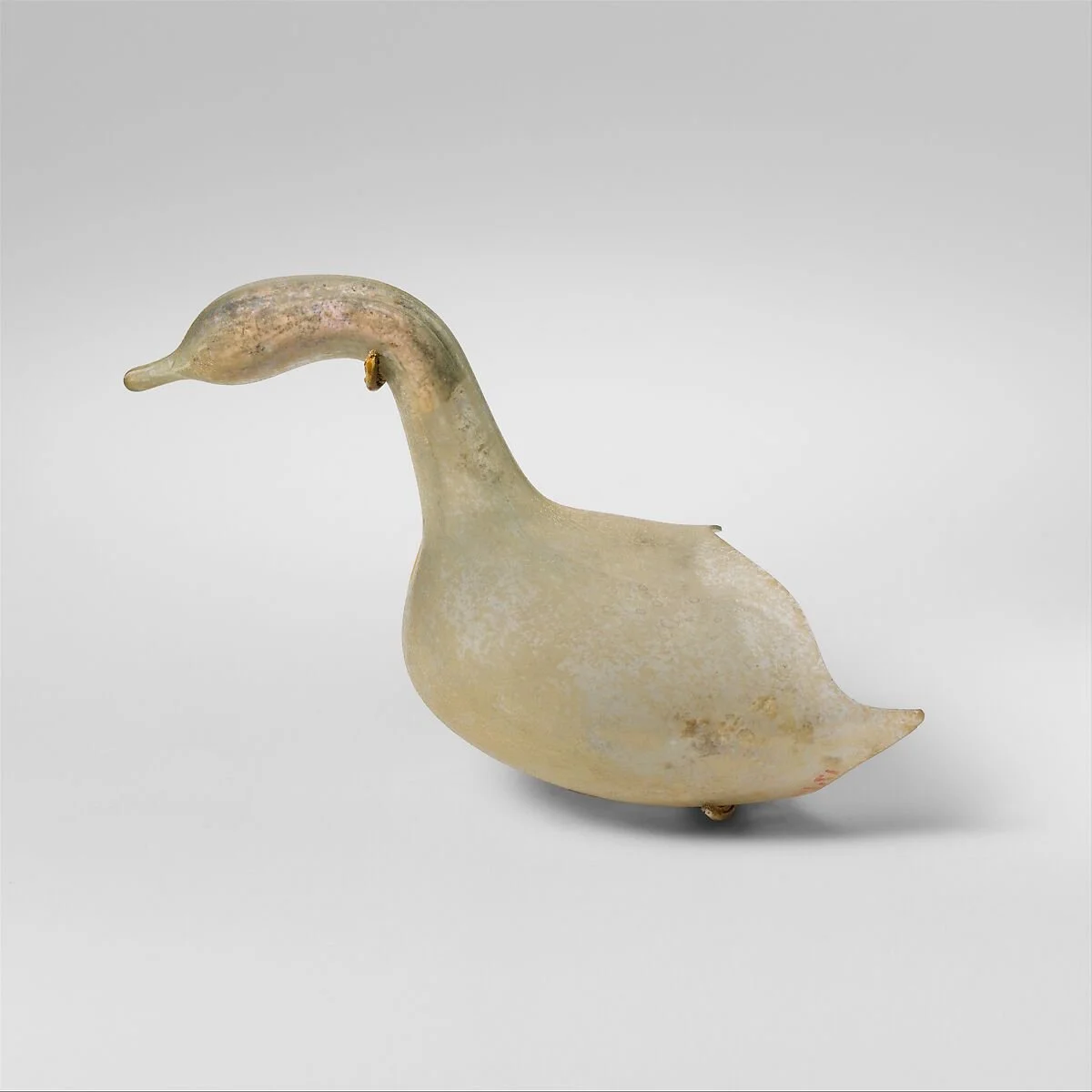
Fashioned from translucent pale blue green glass, its graceful birdlike form features an elongated beak, a gently inclined head, and a tubular neck flowing into a rounded body. Centuries of weathering have produced a subtle iridescence across its surface.
Of particular significance is its ingenious construction. Vessels of this type were manufactured with perfume or cosmetic powder sealed inside. To access the contents, the owner broke the tip of the tail, permanently altering the vessel.
This unusual design represents an early example of sealed, single use packaging, combining craftsmanship, beauty, and function.
The vessel offers a fascinating glimpse into Roman material culture, where even small containers for personal adornment could become objects of artistic expression.
Its survival connects the ancient traditions of glassmaking and perfumery with the enduring human desire to preserve and experience fragrance.Historical Details & Credits
Title: Glass Bottle in the Shape of a Bird
Period: Early Imperial
Date: 1st century CE
Culture: Roman
Medium: Blown glass
Height: 2 5/8 in. (6.7 cm)
Classification: Glass
Collection: The Metropolitan Museum of Art, Department of Greek and Roman Art
Credit Line: Gift of J. Pierpont Morgan, 1917
Accession Number: 17.194.133
Source: The Metropolitan Museum of Art, New York.
© The Metropolitan Museum of Art, where applicable to the image; verify the individual image's rights statement before reproduction.
Roman Glass Perfume Vessel · 1st Century CE
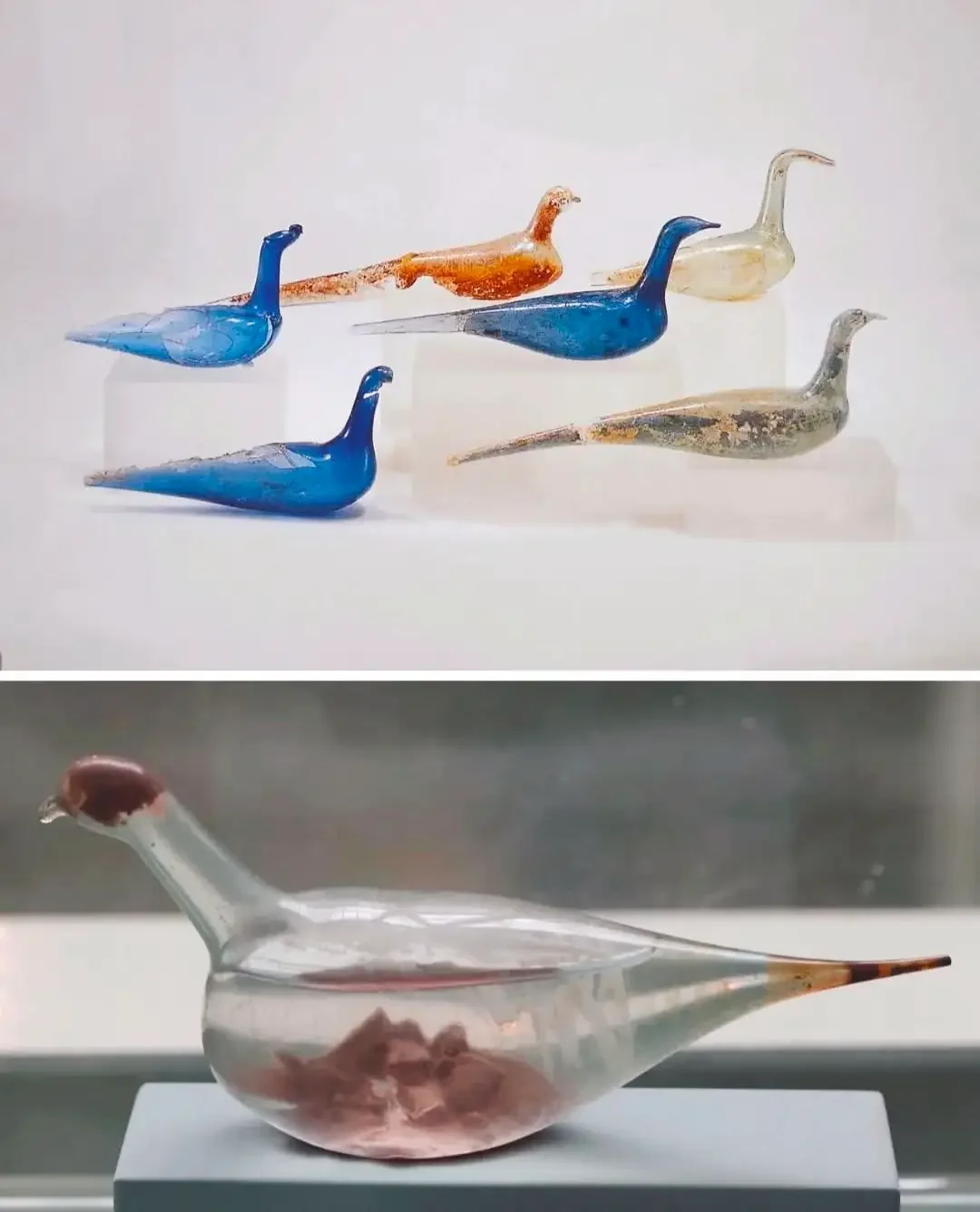
Nearly 2,000 years ago, Roman glassmakers created delicate bird shaped vessels to preserve precious perfumes and aromatic preparations.
Crafted from translucent pale blue glass, these vessels were filled and sealed during manufacture. The slender tail could be broken to release the fragrance, revealing an ingenious relationship between ancient perfumery, glassmaking, and the art of preservation.
Within these fragile vessels, fragrance became a moment suspended in glass, carrying the invisible beauty of the ancient world across centuries, where scent, memory, and imagination endure.
Corning Museum of Glass, 25–99 CE. Collection 66.1.223.